🕒 Your Time: Loading...
📅 Weekday: Loading...
🗓️ Islamic Date: Loading...
Fajr: --:-- Dhuhr: --:-- Asr: --:-- Maghrib: --:-- Isha: --:--

𝐁𝐢𝐨𝐠𝐫𝐚𝐩𝐡𝐲


“Those who embrace Islam illuminate their hearts with truth, finding peace in submission and purpose in divine guidance.”


  • 🕌 How to Learn Arabic: A Step-by-Step Guide for Beginners

    Unlock the Quran’s Beauty: Your Personal Guide to Learning Arabic

    Have you ever listened to a Quran recitation and wished you could understand every word? Or read an Islamic book and longed to grasp its deeper meanings in the original Arabic? You’re not alone.

    For centuries, Muslims have cherished Arabic not just as a language, but as the living voice of our faith. The good news? This divine connection is within your reach – and I’ll show you exactly how to begin.

    Why Your Arabic Journey Matters

    Arabic isn’t just another language to check off your list. It’s your:
    🔑 Direct connection to the Quran’s miraculous words
    💎 Treasure key to unlocking hadith, tafsir, and classical texts
    🌍 Bridge to 400 million Arabic speakers worldwide
    🧠 Mental workout that sharpens memory and cognitive skills

    Allah tells us: “Indeed, We have sent it down as an Arabic Quran so you may understand.” (Yusuf 12:2)

    Your 7-Step Roadmap to Arabic Mastery

    1. Find Your “Why” First

    Ask yourself:

    • Do I want to understand Quranic Arabic?
    • Am I learning for travel or communication?
    • Do I need to study Islamic texts?

    Your answer determines whether you’ll focus on:
    ✔ Classical Arabic (Quran, hadith, Islamic books)
    ✔ Modern Standard Arabic (news, media, conversation)

    2. Meet the Arabic Alphabet (Your New Best Friends)

    Start with these 5 gateway letters:

    • Alif (أ) – Like “a” in “apple”
    • Ba (ب) – The “b” sound
    • Ta (ت) – Soft “t”
    • Tha (ث) – “Th” as in “think”
    • Jeem (ج) – The “j” sound

    Pro Tip: Use the “Write It! Arabic” app to practice writing them daily.

    3. Build Your First 50 Islamic Words

    Start with vocabulary you’ll actually use:

    ArabicMeaningUse in Sentence
    رحمةMercy“القرآن رحمة” (The Quran is mercy)
    صلاةPrayer“أداء الصلاة” (Performing the prayer)
    صدقةCharity“إعطاء صدقة” (Giving charity)

    Memory Hack: Create flashcards with pictures of the Kaaba or mosques to associate words with visual memories.

    4. Grammar Made Simple (Yes, Really!)

    Focus on these 3 game-changing grammar rules first:

    1. Arabic sentences start with verbs (Unlike English)
      • “يقرأ محمد القرآن” (Muhammad reads the Quran)
    2. Words change based on their position
      • “كتاب” (book) becomes “الكتاب” (the book)
    3. Root letters reveal meanings
      • س-ل-م always relates to peace (Islam, salam, Muslim)

    5. Bring Arabic Into Your Daily Life

    Try these painless immersion techniques:

    • Morning Routine: Listen to Quran with translation (try the “Quranic” app)
    • Commute Time: Arabic podcasts like “Arabic in 60 Steps”
    • Evening Wind-Down: Watch 5 minutes of an Arabic Islamic cartoon (like “Noor Kids”)

    6. Start Understanding Actual Quran Verses

    Begin with these beginner-friendly surahs:

    1. Surah Al-Fatiha – Learn it word-by-word
    2. Surah Al-Ikhlas – Only 4 short verses
    3. Surah An-Nas – Perfect for basic vocabulary

    Use color-coded Quran apps that show:
    🔴 Verbs
    🔵 Nouns
    🟢 Prepositions

    7. Stay Motivated When It Gets Tough

    Every Arabic learner hits plateaus. When you do:

    • Remember the reward: “Whoever recites one letter of the Quran gets 10 rewards” (Tirmidhi)
    • Join online study circles (Many are free on Zoom)
    • Track progress with a “Arabic Habit Tracker”

    Must-Have Resources (All Free!)

    ResourceBest ForWhy We Love It
    Bayyinah TVQuranic ArabicNouman Ali Khan’s engaging style
    Madinah ArabicGrammar FoundationUniversity-level teaching for free
    Quranic AppWord-by-Word LearningStunning visual breakdowns
    ArabicPod101Listening PracticeReal-life conversation practice

    The Book from a Well-Known scholar: Omar Sulaiman

    “ALLAH Loves”

    https://amzn.to/4lMqPFd


    Your First Arabic Practice (Right Now!)

    Let’s read together:

    بِسْمِ اللهِ الرَّحْمٰنِ الرَّحِيْمِ
    “Bismillah ar-Rahman ar-Raheem”

    You’ve just:

    1. Practiced 3 Arabic letters (ب, س, م)
    2. Said the most important Islamic phrase
    3. Taken your first step toward Quranic understanding

    Final Encouragement

    The Sahaba didn’t learn Arabic overnight. They grew into it – just like you will. Every minute you spend:

    • Writing alif-baa-taa
    • Struggling through grammar rules
    • Sounding out Quranic words

    …is worship. The Prophet ﷺ said: “The best among you are those who learn the Quran and teach it.” (Bukhari)

    Your journey starts today. Not when you’re “ready.” Not when you have “more time.” Now.

    Next Step: Open your Quran to Surah Al-Fatiha. Look at the first word. Say it out loud. You’ve begun.

    May Allah make your path to His words easy. آمين.
    IMPORTANT: Learn Arabic from the Best teachers on internet and get unique discount of 10% from our link:

    https://portal.pathtoarabic.com/member/aff/go/husnain313


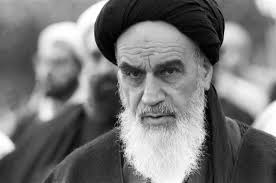
  • 🕌 Biography of Imam Ruhollah Khomeini

    The Revolutionary Leader of the Islamic Republic of Iran


    The Life and Legacy of Imam Khomeini: Scholar, Revolutionary, and Founder of Islamic Iran

    Few figures in modern history have shaped a nation’s destiny as profoundly as Imam Ruhollah Khomeini. From humble beginnings in a small Iranian town to leading one of the 20th century’s most consequential revolutions, his life was a testament to faith, resilience, and an unwavering commitment to Islamic governance.


    🌱 Early Life: The Making of a Scholar

    Born September 24, 1902, in Khomein, Iran, Sayyid Ruhollah Musavi Khomeini was raised in a family of religious scholars tracing their lineage back to the Prophet Muhammad ﷺ. Tragedy struck early—his father, Ayatollah Mustafa Musavi, was assassinated when Khomeini was just five months old, leaving him to be raised by his mother and aunt.

    From childhood, Khomeini immersed himself in Islamic studies, mastering:
    📖 Fiqh (Islamic Jurisprudence)
    🧠 Philosophy & Irfan (Islamic Mysticism)
    ⚖️ Akhlaq (Ethics & Morality)

    By his early 20s, he had moved to Qom, Iran’s leading center of Shia scholarship, where he studied under great scholars like Ayatollah Abdul-Karim Haeri Yazdi.


    🔥 The Voice Against Oppression

    In the 1960s, Iran was ruled by Mohammad Reza Shah Pahlavi, a Western-backed monarch whose policies—including land reforms and secularization—angered religious leaders. Khomeini emerged as the Shah’s most vocal critic, condemning:
    ❌ Corruption & dictatorship
    ❌ Western cultural influence
    ❌ The suppression of Islamic values

    In 1963, after a fiery speech against the Shah’s “White Revolution,” Khomeini was arrested, sparking mass protests. A year later, he was exiled—first to Turkey, then Iraq, and finally France.

    Yet, even from exile, his recorded sermons spread across Iran, fueling resistance.


    ⚡ The 1979 Revolution: A Nation Transformed

    By 1979, Iran was boiling with unrest. Economic struggles, political repression, and Khomeini’s calls for an Islamic government had turned public sentiment against the Shah.

    On February 1, 1979, after 15 years in exile, Khomeini returned to millions of cheering Iranians. Within days, the monarchy collapsed, and the Islamic Republic of Iran was born.

    Key Changes Under Khomeini’s Leadership:

    ✔ Islamic Law (Sharia) became the foundation of governance
    ✔ “Wilayat al-Faqih” (Guardianship of the Jurist) was established—giving religious scholars ultimate authority
    ✔ Anti-Western, anti-imperialist policies were enforced
    ✔ Support for oppressed Muslims worldwide (like Palestinians)

    His revolution inspired Islamic movements globally, making him a hero to some and a controversial figure to others.


    📜 Writings & Teachings

    Beyond politics, Khomeini was a prolific scholar. His works include:

    • “Islamic Government: Governance of the Jurist” (the blueprint for Iran’s system)
    • “Kashf al-Asrar” (Unveiling of Secrets) – critiquing secular rule
    • “Tahrir al-Wasilah” – a detailed fiqh manual

    He also penned mystical poetry, reflecting his deep spiritual side.


    🕊️ Death & Immortal Legacy

    Imam Khomeini passed away on June 3, 1989, at age 86. His funeral drew over 10 million mourners—one of the largest in history. Today, his gold-domed shrine in Tehran remains a pilgrimage site.

    Why Does He Still Matter?

    ✅ To supporters, he liberated Iran from tyranny and restored Islamic rule.
    ⚠️ To critics, his rule was marked by strict governance and suppression of dissent.

    Yet no one denies his impact—on Iran, the Muslim world, and the global balance of power.


    💭 Final Reflection

    Khomeini’s life forces us to ask:

    • Can religion and politics truly mix?
    • What price is paid for revolution?
    • How should Muslims resist oppression?

    Whether admired or debated, his legacy continues to shape history.

    “A nation that has millions of martyrs will never be defeated.”
    — Imam Khomeini


  • 🔬 Top 10 Muslim Scientists Around the World – From Golden Age to Modern Genius

    The Golden Legacy of Muslim Scientists: From Algebra to the Cosmos

    For centuries, Muslim minds have shaped the foundations of modern science—not in spite of their faith, but because of it. The Quran’s very first command? “Read!” (Iqra).

    From the Golden Age to today, here are 10 extraordinary Muslim scientists who transformed the world—proving that Islam and science have always walked hand in hand.


    🏛️ 1. Ibn Sina (Avicenna) – The Father of Modern Medicine

    📜 Persia (980–1037 CE)

    Imagine a single book being the medical bible for 600 years. That was Ibn Sina’s “Canon of Medicine”—a masterpiece so accurate that European universities used it until the 17th century.

    🔬 Legacy:
    ✔ First to identify contagious diseases
    ✔ Pioneered clinical trials and quarantine
    ✔ Wrote 450+ works on medicine, philosophy, and astronomy

    💡 “Medicine is the art of preserving health and curing disease.” — Ibn Sina


    📚 2. Al-Khwarizmi – The Man Who Gave Us Algebra

    📜 Iraq (780–850 CE)

    Every time you solve for “x”, thank Al-Khwarizmi. This genius:
    ✔ Invented algebra (from his book “Al-Jabr”)
    ✔ Introduced Hindu-Arabic numerals (0-9) to the West
    ✔ Laid the groundwork for computer algorithms (yes, his name inspired the term!)

    🔢 Legacy: Without him, modern math, engineering, and coding wouldn’t exist.


    🌌 3. Omar Khayyam – The Astronomer-Poet Who Redefined Time

    📜 Persia (1048–1131 CE)

    By day, a mathematician. By night, a poet. Omar Khayyam:
    ✔ Designed the Jalali calendar (more accurate than the Gregorian one!)
    ✔ Solved cubic equations geometrically
    ✔ Penned the Rubaiyat, blending science and Sufi wisdom

    📅 Legacy: His calendar is still used in Iran and Afghanistan today.


    🧬 4. Dr. Hayat Sindi – The Biotech Pioneer for the Poor

    🌍 Saudi Arabia (b. 1967)

    One of the first Saudi women at Harvard Medical School, Dr. Sindi invented:
    ✔ Low-cost diagnostic tools for rural clinics
    ✔ Co-founded the Diagnostics For All initiative

    💉 Mission: “Science must serve humanity.”


    🛰️ 5. Dr. Essam Heggy – The Egyptian NASA Scientist

    🌍 Egypt (b. 1975)

    This planetary scientist helped:
    ✔ Map water on Mars with NASA’s rovers
    ✔ Discover underground lakes in deserts using satellites
    ✔ Advocate for Arab world space programs

    🚀 Quote: “The Quran speaks of celestial exploration—we’re fulfilling that call.”


    🧪 6. Dr. Mona Nemer – Canada’s Chief Science Advisor

    🌍 Lebanon/Canada (b. 1957)

    genetics powerhouse, Dr. Nemer:
    ✔ Researched heart disease at the molecular level
    ✔ Advises the Canadian government on STEM policy
    ✔ Pushes for Muslim women in science

    🧬 Legacy: Proving faith and cutting-edge research coexist.


    🔬 7. Prof. Mohamed El Naschie – The Einstein of the East

    🌍 Egypt (b. 1943)

    theoretical physics legend, he:
    ✔ Published 800+ papers on quantum mechanics
    ✔ Founded the journal Chaos, Solitons & Fractals
    ✔ Developed “E-infinity theory” (a new approach to spacetime)

    🌠 Mind-blowing fact: His work bridges relativity and quantum physics.


    💡 8. Dr. Ali Javan – The Laser Revolutionist

    🌍 Iran/USA (1926–2016)

    Ever had laser surgery? Used a barcode scanner? Thank Dr. Javan, who:
    ✔ Invented the gas laser (1960)
    ✔ Enabled fiber-optic communication
    ✔ Won the Albert Einstein World Award

    ⚡ Impact: His invention birthed modern tech, medicine, and telecom.


    🌕 9. Dr. Farouk El-Baz – The Man Behind the Moon Landing

    🌍 Egypt (b. 1938)

    This NASA geologist:
    ✔ Trained Apollo astronauts in lunar geology
    ✔ Selected the moon landing sites
    ✔ Later used satellites to find water in deserts

    🌑 Epic fact: The “El-Baz crater” on the moon is named after him!


    🌟 10. Dr. Mehmet Öz – The Surgeon Who Took Science to TV

    🌍 Turkey/USA (b. 1960)

    heart surgeon turned media icon, Dr. Oz:
    ✔ Performed life-saving surgeries
    ✔ Hosted The Dr. Oz Show to demystify medicine
    ✔ Advocates for preventive healthcare in Muslim communities

    ❤️ Mission: “Healing is a form of worship.”


    🔭 Islam & Science: A Timeless Bond

    These luminaries prove what the Quran declared 1,400 years ago:

    “We will show them Our signs in the horizons and within themselves until it becomes clear that it is the truth.” (Quran 41:53)

    From Ibn Sina’s medicine to El-Baz’s moon missions, Muslim scientists have always been Allah’s instruments of discovery.

    3 Golden Hadiths to Inspire Muslim Scientists Today:

    1️⃣ “The scholar’s ink is holier than the martyr’s blood.” (Prophet Muhammad ﷺ)
    2️⃣ “Seek knowledge, even if you must go to China.” (Musnad Ahmad)
    3️⃣ “Whoever revives a science, inherits the reward of all who practice it.” (Sunan Ibn Majah)

    💫 Final Thought:
    The next great Muslim scientist could be you. Will you answer the call?