🕒 Your Time: Loading...
📅 Weekday: Loading...
🗓️ Islamic Date: Loading...
Fajr: --:-- Dhuhr: --:-- Asr: --:-- Maghrib: --:-- Isha: --:--

𝐁𝐢𝐨𝐠𝐫𝐚𝐩𝐡𝐲


“Those who embrace Islam illuminate their hearts with truth, finding peace in submission and purpose in divine guidance.”


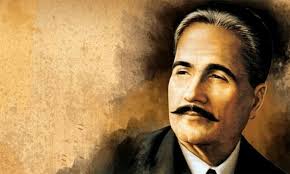
  • 🖋️ Allama Muhammad Iqbal – The Poet of the East and Visionary of Pakistan

    The Visionary Who Dreamed a Nation: The Life and Legacy of Allama Iqbal

    Few thinkers have shaped a nation’s destiny through words alone. Allama Muhammad Iqbal—philosopher, poet, and the spiritual architect of Pakistan—was one of them. His poetry didn’t just rhyme; it ignited revolutions in hearts and minds.

    🌟 From Sialkot to the World: The Making of a Thinker

    Born on November 9, 1877, in Sialkot (now Pakistan), Iqbal grew up in a family deeply rooted in faith and learning. Even as a child, he was drawn to poetry, philosophy, and the mysteries of existence.

    After excelling in Lahore’s Government College, his quest for knowledge took him to Europe—studying at Cambridge, earning a PhD in Germany, and absorbing Western philosophy. Yet, instead of being swayed by foreign ideas, he returned home more convinced than ever of Islam’s intellectual and spiritual power.

    ✍️ Poetry That Stirred Souls

    Iqbal’s verses weren’t mere words; they were wake-up calls. Writing in Urdu and Persian, he challenged Muslims to rise above complacency and reclaim their greatness. His core message? Khudi (selfhood)—the idea that true strength comes from within.

    Some of his timeless works include:

    • Bang-e-Dra (“The Call of the Marching Bell”) – A collection echoing themes of faith and revival.
    • Asrar-e-Khudi (“Secrets of the Self”) – A philosophical masterpiece on self-realization.
    • Bal-e-Jibril (“Gabriel’s Wing”) – Spiritual reflections intertwined with divine inspiration.

    His poetry earned him titles like Shair-e-Mashriq (Poet of the East) and Mufakkir-e-Pakistan (The Thinker of Pakistan). But his influence stretched far beyond titles—it sparked a movement.

    🏛️ The Dream of a Muslim Homeland

    While many knew Iqbal as a poet, his political vision was just as profound. In 1930, at the All-India Muslim League session, he made a historic proposition: a separate homeland for Indian Muslims. At a time when independence struggles were united against British rule, this idea was radical—yet necessary.

    Though he didn’t live to see Pakistan’s birth in 1947, his philosophy became its foundation. He envisioned a nation where Islam’s principles could thrive, free from oppression—a dream later realized by Quaid-e-Azam Muhammad Ali Jinnah.

    🌍 A Legacy That Lives On

    Iqbal passed away on April 21, 1938, but his words never did. His tomb near Lahore’s Badshahi Mosque remains a place of reflection, where visitors ponder his enduring question:

    “Khudi ko kar buland itna, ke har taqdeer se pehle
    Khuda bande se khud poochhe, bata teri raza kya hai.”

    (“Elevate your selfhood so high that before every decree,
    God Himself asks, ‘Tell me, what is your wish?’”)

    Today, his poetry is recited in schools, his philosophy debated in universities, and his vision cherished by millions. From inspiring independence to urging self-discovery, Iqbal’s voice remains as relevant as ever.

    💡 Final Reflection

    Allama Iqbal was more than a poet—he was a beacon of hope. In a time of darkness, he reminded Muslims of their potential. In an age of division, he called for unity. And in a world chasing material success, he taught that true greatness lies in faith, knowledge, and an unbreakable spirit.

    His life asks us: Will we remain asleep—or rise to the call of our own “marching bell”?

  • 🌟 Osama AlShurafa – A Modern Voice Reviving the Muslim Heart

    Osama AlShurafa: Awakening Hearts in a Distracted World

    In an age where social media drowns out sincerity and life moves at a dizzying pace, Osama AlShurafa emerges as a voice of clarity—a guide calling Muslims back to what truly matters. He isn’t just another speaker; he’s a mentor, an author, and a relatable voice for a generation searching for meaning beyond the noise.

    From Science to the Soul: The Making of a Modern Da’ee

    Osama’s journey is anything but ordinary. With a degree in Biomedical and Electrical Engineering, he could have easily pursued a lucrative career in tech or medicine. But his heart was pulled elsewhere—toward a deeper quest for knowledge. He went on to earn a Master’s in Liberal Arts from Harvard, sharpening his ability to bridge intellectual thought with spiritual truth.

    Yet, his most transformative education came from the Qur’an. Holding an Ijazah in Hafs narration, he immersed himself in Islamic theology, mastering not just the words of the Qur’an but their soul-stirring power. This unique blend of secular and sacred knowledge allows him to speak to both the mind and the heart.

    A Speaker Who Doesn’t Just Talk—He Awakens

    If you’ve ever heard Osama speak, you know his words don’t just land—they resonate. His talks aren’t polished performances; they’re raw, emotional, and deeply human. He tackles real struggles:

    • “Why do I pray but feel nothing?”
    • “How do I find sincerity in a world obsessed with image?”
    • “What happens after we die—and why should I care now?”

    Whether at Islamic conferences, youth seminars, or fundraising events, his message cuts through the distractions, reminding listeners that faith isn’t about appearing perfect—it’s about being real with Allah.

    Muslim Hub: Where Faith Meets Action

    Osama didn’t stop at speaking. He founded Muslim Hub, a global platform mentoring over 150,000 Muslims to live Islam with purpose. Through:

    ✔ Daily reminders that refocus the heart
    ✔ Online mentorship for those seeking guidance
    ✔ A supportive community for spiritual growth

    …he’s creating a movement of Muslims who don’t just know their faith—they live it.

    “The Afterlife Manual”: A Book That Changes Lives

    His book, “The Afterlife Manual,” isn’t your typical religious read. It’s a heartfelt, practical guide to:

    • What happens the moment we die
    • The reality of the grave and Barzakh
    • How to prepare for eternity—starting today

    Written in a way that’s both profound and relatable, it’s become a lifeline for Muslims wanting to live with the Hereafter in mind.

    Meeting People Where They Are

    Osama doesn’t wait for people to come to him—he meets them where they already are:

    📱 Instagram & TikTok – Bite-sized reminders for the scroll-hungry generation
    🎙 YouTube & Podcasts – Deep dives into faith, doubt, and spiritual growth
    💬 Clubhouse & Live Sessions – Real-time conversations on real struggles

    He understands that dawah isn’t about preaching—it’s about connecting.

    Why His Message Matters Now More Than Ever

    In a world where:

    • Anxiety is at an all-time high
    • Young Muslims feel disconnected from their faith
    • Spirituality is reduced to aesthetics

    …Osama’s work is a lifeline. He doesn’t just tell people to be better—he shows them how, with compassion, wisdom, and unwavering honesty.

    Final Thought: More Than a Speaker—A Guide for Our Times

    Osama AlShurafa’s greatest strength isn’t his knowledge or eloquence—it’s his authenticity. In his own words:

    “It’s not about looking religious. It’s about being real with Allah, with yourself, and with your purpose.”

    And in a world starving for truth, that’s exactly what we need.


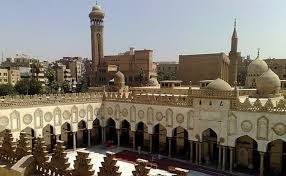
  • 🕌 How to Get Admission in Al-Azhar University (Jamia Al-Azhar), Egypt – A Guide for International Students

    Your Dream of Studying at Al-Azhar: A Step-by-Step Guide

    For over a thousand years, Al-Azhar University has stood as a beacon of Islamic knowledge, its minarets overlooking Cairo’s bustling streets. Founded in 970 CE, it’s not just a university—it’s a living legacy where scholars like Imam Suyuti and Ibn Hajar once walked.

    If you’ve ever dreamed of studying here, this guide is your roadmap.


    🌍 Who Can Apply?

    Al-Azhar opens its doors to Muslim students worldwide, but you’ll need:
    ✔ A high school diploma (or equivalent, 12 years of education)
    ✔ Basic Arabic (for religious faculties—you’ll need to understand lectures)
    ✔ Islamic studies background (if applying to Shari’ah, Tafsir, or Hadith)

    Worried about your Arabic? Many students first join Ma’had Al-Azhar, a prep school that teaches Arabic before university.


    📚 What Can You Study?

    Al-Azhar isn’t just about fiqh and hadith—it offers both religious and secular degrees:

    📖 Islamic Studies (Taught in Arabic)

    • Usul al-Din (Theology): Dive deep into Aqeedah, Tafsir, and Hadith
    • Shari’ah & Law: Study fiqh, Islamic jurisprudence, and legal principles
    • Dawah & Islamic Culture: Learn how to effectively share Islam

    🔬 Modern Sciences (For Advanced Arabic Speakers)

    • Medicine, Engineering, Pharmacy
    • Commerce, Science, Agriculture

    Note: Science/medical programs are competitive and may require higher Arabic fluency.

    But no worries Learn Arabic from the best teachers and get 10% Discount from our link:

    https://portal.pathtoarabic.com/member/aff/go/husnain313


    📝 Step-by-Step Application (2025 Guide)

    1️⃣ Gather Your Documents

    You’ll need:

    • Passport (valid for at least 1 year)
    • High school certificate (translated & attested by your Ministry of Education + Egyptian Embassy)
    • Birth certificate (translated)
    • 6 passport-sized photos (white background)
    • Medical clearance (proof of good health)

    Pro Tip: Start attestation early—it can take weeks!

    2️⃣ Apply Online or In-Person

    • 🌐 Online (Easier, but limited slots)
    • ✈️ In-Person (More reliable)
      • Fly to Cairo (yes, before acceptance!)
      • Submit documents at the International Students Office
      • May require an Arabic entrance exam

    3️⃣ Take the Placement Test (If Required)

    For Islamic faculties, expect questions on:

    • Qur’an memorization (basic Surahs)
    • Arabic grammar (Nahw & Sarf)
    • Basic fiqh (e.g., how to pray, wudu)

    No pressure—if you fail, they may place you in Arabic prep first.

    4️⃣ Get Your Acceptance Letter

    • Once approved, Al-Azhar will issue an official admission letter.
    • Use this to apply for a student visa at the Egyptian embassy.

    🏡 Life as an Al-Azhar Student

    💰 Costs

    • Tuition: FREE for Islamic studies! (Yes, really.)
    • Living expenses: ~$200-$400/month (dorms are cheap but basic)
    • Visa & Travel: Your biggest cost (flights, residency permits)

    🏠 Housing

    • Dormitories: Affordable (~$30/month) but no AC (Cairo is HOT!)
    • Off-campus: Many students share apartments in Nasr City (near campus)

    🌆 Living in Cairo

    • Language barrier? Learn Egyptian Arabic—it’s different from Fusha!
    • Food: Koshari, falafel, and fuul will be your best friends.
    • Community: You’ll meet students from Indonesia to Nigeria—lifelong bonds await.

    ✅ Final Checklist

    RequirementStatus
    Valid Passport✅ Required
    Attested Certificates✅ Must be legalized
    Arabic Prep❓ If weak
    Visa Application✅ After acceptance

    🤲 Is It Worth It?

    Studying at Al-Azhar isn’t just about a degree—it’s about:

    • Walking the same halls as centuries of scholars
    • Living in the heart of the Islamic world
    • Building a deep, lifelong connection with the deen

    The Prophet ﷺ said:
    “Whoever travels a path seeking knowledge, Allah makes easy for him a path to Paradise.” (Muslim)

    So—are you ready to take the first step? 🚀