
🕒 Your Time: Loading...
📅 Weekday: Loading...
🗓️ Islamic Date: Loading...
Fajr: --:-- Dhuhr: --:-- Asr: --:-- Maghrib: --:-- Isha: --:--

Category: Islamic Scholars

  • Syed Abul A’la Maududi

    Syed Abul A’la Maududi


    Syed Abul A’la Maududi: A Visionary Islamic Thinker and Reformer

    Early Life and Background

    Born on September 25, 1903, in Aurangabad, Hyderabad Deccan (British India), Syed Abul A’la Maududi (also spelled Mawdudi or Modudi) grew up in a deeply religious and scholarly family. His father, Syed Ahmad Hasan Maududi, was a lawyer with a strong commitment to Islamic teachings, ensuring that young Maududi received a solid religious foundation. The family proudly traced its lineage back to Prophet Muhammad (PBUH) through Imam Ali (RA).

    Due to health concerns, Maududi was primarily homeschooled, mastering Arabic, Persian, and Islamic sciences under private tutors. Unlike many scholars of his time, he did not attend a traditional Islamic seminary or Western-style university. Instead, he developed his intellectual prowess through self-study and journalism.

    Journalism and Early Career

    At just 17 years old, Maududi entered the world of journalism, writing for leading Urdu newspapers. His sharp intellect and deep understanding of Islamic principles quickly earned him editorial roles at publications like “Taj,” “Muslim,” and “Al-Jamiah.”

    In 1932, he took a bold step by launching his own journal, “Tarjuman al-Qur’an,” which became a powerful platform for his revolutionary ideas. Through this publication, he challenged conventional interpretations of Islam, presenting it as a complete way of life rather than just a set of rituals.

    Revolutionary Ideas and Intellectual Contributions

    Maududi’s writings reshaped modern Islamic thought by:

    • Rejecting secularism and Western imperialism
    • Advocating for Sharia (Islamic law) as the foundation of governance
    • Introducing the concept of “Theo-democracy”—a system where divine sovereignty guides political authority

    His most famous work, “Tafhim-ul-Qur’an” (Understanding the Qur’an), is a 30-year masterpiece that blends classical Islamic scholarship with contemporary socio-political analysis. Unlike traditional commentaries, it was written in clear Urdu, making the Qur’an accessible to everyday Muslims. Today, it remains one of the most widely read and translated Qur’anic interpretations globally.

    Founding Jamaat-e-Islami

    In 1941, Maududi established Jamaat-e-Islami, the first organized Islamic political movement in South Asia. Its mission was to:

    • Promote Islam as an all-encompassing system
    • Oppose secular nationalism (including the Indian National Congress and Muslim League)
    • Work toward establishing an Islamic state through peaceful means

    After the 1947 Partition, the organization split into separate branches in India, Pakistan, and later Bangladesh, each adapting to its national context.

    Role in Pakistan’s Formation and Political Struggles

    After migrating to Pakistan in 1947, Maududi became a leading voice in shaping the country’s Islamic identity. He:

    • Opposed secular governance, demanding an Islamic constitution
    • Clashed with political leaders over the role of religion in state affairs
    • Faced imprisonment multiple times for his opposition to government policies

    Despite controversies, his ideas influenced Islamic movements worldwide, including Egypt’s Sayyid Qutb and other revivalist thinkers.

    Criticisms and Debates

    Maududi’s bold ideas attracted both admiration and criticism:

    • Traditional scholars (ulama) questioned his interpretations of Islamic law.
    • Secularists and liberals opposed his vision of an Islamic state.
    • Some Muslims saw his approach as overly political, while others hailed him as a mujaddid (reviver of faith).

    Yet, his impact on modern Islamic thought remains undeniable.

    Final Years and Legacy

    Maududi passed away on September 22, 1979, in Buffalo, New York, while receiving medical treatment. He was buried in Ichhra, Lahore, where his grave remains a site of reverence.

    Enduring Influence

    Today, Maududi is recognized as:

    • A pioneer of political Islam
    • A key intellectual behind Islamic revivalist movements
    • A scholar who bridged classical and modern Islamic thought

    His works, including “Towards Understanding Islam” and “Islamic Law and Constitution,” continue to inspire Muslims worldwide.

    Famous Quotes

    • “Islam is not just a set of rituals. It is a comprehensive system, a way of life.”
    • “Sovereignty belongs to Allah alone. Man is only His trustee.”

    Maududi’s legacy endures as Muslims around the world engage with his vision of Islam as a dynamic, all-encompassing guide for personal and societal transformation.
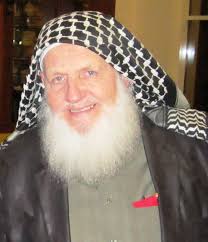
  • 🌟 The Conversion Story of Yusuf Estes

    🌟 The Conversion Story of Yusuf Estes

    What's Islam? Islam in Brief - Yusuf Estes

    From Christian Minister to Muslim Educator

    👶 Early Life & Christian Roots

    Born as Joseph Edward “Skip” Estes in 1944, in the United States (Ohio, later Texas), Yusuf Estes was raised in a devout Protestant Christian family. His upbringing was rooted in conservative religious values. His father was also involved in ministry work, and the family maintained a strong Christian identity.

    Yusuf himself became deeply involved in Christian missionary activities, music, and entertainment. He was:

    • A music minister in churches
    • A successful businessman, owning music stores
    • A TV host and entertainer, sometimes even performing as “Skippy the Clown”
    • A representative in interfaith events, including a U.N.-related peace summit

    At this stage, Yusuf was fully immersed in his Christian faith and had little interest in, or understanding of, Islam.


    🤝 First Encounter with a Muslim

    In the early 1990s, his father entered into a business deal with a Muslim man from Egypt, named Muhammad, who would eventually become central to Yusuf’s conversion.

    At first, Yusuf and his family were skeptical of Muhammad. Yusuf admits he held many misconceptions about Muslims — thinking they were terrorists, camel riders, or backward people. His mission, at that point, was to convert Muhammad to Christianity.

    But as they spent time together, Yusuf noticed something very different about Muhammad:

    “He didn’t drink. He didn’t smoke. He didn’t curse. He was always calm, respectful, and never lied. He prayed with dedication five times a day.”

    Yusuf was amazed at how disciplined, spiritual, and peaceful Muhammad was — something he felt was missing in his own life.


    📖 Questions & Curiosity

    Their conversations turned into debates. Yusuf asked challenging theological questions, and Muhammad answered with patience and logic. Yusuf, being deeply familiar with the Bible, tried to find faults in Islam. But he found himself struggling to defend some of Christianity’s doctrines, especially:

    • The Trinity
    • Original sin
    • The concept of Jesus as God

    Muhammad, on the other hand, emphasized Islam’s monotheism — the belief in one God (Allah) without partners or intermediaries.

    🌙 A Turning Point

    Yusuf invited a Catholic priest friend of his, Father Peter Jacobs, to join the discussions — hoping to strengthen their arguments against Islam. But what happened next shocked him: the priest became impressed by Islam too.

    Soon after, the priest himself accepted Islam, followed by Yusuf’s wife, and then his father. Yusuf, shaken and confused, began reading the Qur’an and attending prayers.

    “I went into a small masjid and put my head on the floor. I said, ‘Oh God, if You’re there, guide me.’ And I cried like a baby.”

    That night, he felt a sense of clarity and peace that he had never experienced before.


    🕋 Shahada – Entering Islam

    In July 1991, Yusuf Estes finally said the Shahada — the declaration of faith — and became a Muslim:

    “Ashhadu an la ilaha illallah, wa ashhadu anna Muhammadan rasulullah.”
    (“I bear witness that there is no god but Allah, and I bear witness that Muhammad is the Messenger of Allah.”)

    He chose the name Yusuf (Joseph in Arabic) after the Prophet known for his patience and trials — a reflection of his own spiritual journey.


    📢 Life After Conversion

    After accepting Islam, Yusuf Estes didn’t retreat — he dedicated his life to dawah (Islamic outreach):

    • Became a Muslim chaplain for U.S. federal prisons
    • Traveled globally to teach Islam in an engaging, humorous, and non-confrontational style
    • Founded GuideUS TV, one of the first free Islamic TV channels in North America
    • Gave lectures worldwide, including at Islamic universities, conferences, and interfaith events
    • Won the Islamic Personality of the Year award in Dubai (2012)

    He became known as the “Funny Sheikh” due to his relatable style, humor, and down-to-earth approach to teaching Islam.


    💡 Key Messages from His Story

    1. Don’t judge Islam by what you see in the media.
    2. Islam encourages questions and critical thinking.
    3. True guidance comes from sincerity and asking Allah.
    4. People can change — no matter how far they are.
    5. One good Muslim’s character can transform lives.

  • Nouman Ali Khan: A Modern Guide to the Quran

    Nouman Ali Khan: A Modern Guide to the Quran

    Early Life: A Global Childhood

    Born on May 4, 1978, in Berlin, Germany, Nouman Ali Khan grew up in a Pakistani diplomatic family. His father’s career took them across the world—from Germany to Saudi Arabia and Pakistan—before they finally settled in the United States during his teenage years. This multicultural upbringing gave him a unique perspective, blending Eastern and Western influences.

    From Self-Taught Student to Quranic Teacher

    Unlike traditional scholars, Nouman didn’t attend a famous Islamic university. Instead, he studied Arabic and the Quran independently, driven by a deep curiosity. Before dedicating his life to Islamic education, he worked in youth programs, where he realized how disconnected many Muslims were from the Quran’s deeper meanings.

    The Birth of Bayyinah Institute

    In 2005, he founded the Bayyinah Institute in Texas with a simple mission: Make the Quran’s language and wisdom accessible to everyone. His approach was fresh—no heavy jargon, just clear, relatable lessons that made Arabic and Quranic studies engaging.

    What Bayyinah Offers:

    ✔ Arabic Grammar Made Easy – His “Arabic with Husna” series breaks down complex rules into bite-sized lessons.
    ✔ Quranic Reflections – Instead of dry lectures, he shares “Aha!” moments about Quranic stories and verses.
    ✔ Online Learning – From YouTube to paid courses, he meets students where they are.

    Why People Love His Teachings

    Nouman Ali Khan speaks like a wise older brother—honest, humorous, and deeply caring. His signature style includes:

    • Real-life analogies (comparing Quranic lessons to everyday struggles).
    • Focus on the Quran’s “why”—not just recitation, but transformation.
    • Addressing modern dilemmas (mental health, relationships, faith crises).

    Controversy & Comeback

    In 2017, he faced allegations of inappropriate private messages with women. He denied misconduct but admitted to crossing boundaries in communication. The Muslim community was divided, but after stepping back temporarily, he returned with a renewed focus on accountability and teaching.

    Personal Glimpses

    A devoted father, he often shares parenting insights in his talks, reminding Muslims that faith starts at home. His famous quote:

    “The Quran isn’t just a book you read—it’s a book that reads you.”

    Legacy: Bridging Gaps

    Despite setbacks, his impact is undeniable:

    • Revived Quranic love among English-speaking Muslims.
    • Pioneered engaging Arabic education (no more rote memorization!).
    • Inspired a generation to see the Quran as a guide, not just a ritual.

    Final Thought

    Nouman Ali Khan’s journey proves that great teachers aren’t perfect—they’re real. His work continues to help millions connect with the Quran in a language their hearts understand.