🕒 Your Time: Loading...
📅 Weekday: Loading...
🗓️ Islamic Date: Loading...
Fajr: --:-- Dhuhr: --:-- Asr: --:-- Maghrib: --:-- Isha: --:--

𝐁𝐢𝐨𝐠𝐫𝐚𝐩𝐡𝐲


“Those who embrace Islam illuminate their hearts with truth, finding peace in submission and purpose in divine guidance.”


  • Ali Khamenei

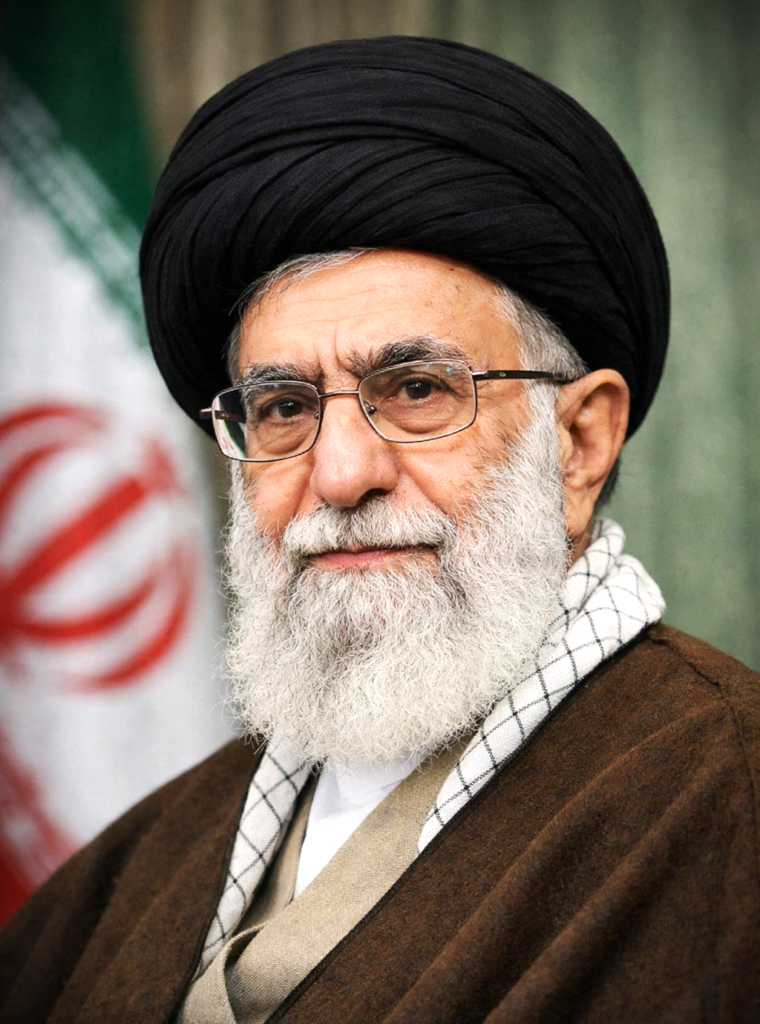
    The Life of Ali Khamenei


    Note: As of 2026, Ali Khamenei is still alive. This article covers his life from birth to the present day.

    Early Life and Family Background (1939–1950s)

    Ali Hosseini Khamenei was born on April 19, 1939, in Mashhad, a major religious center in northeastern Iran. He was born into a religious family; his father, Javad Khamenei, was a cleric of modest means. Growing up in a simple household, Khamenei was introduced early to Islamic scholarship and religious discipline.

    From a young age, he pursued traditional Islamic studies, beginning in Mashhad and later continuing in important centers of Shi’a scholarship such as Qom and Najaf. These years shaped his intellectual foundation in jurisprudence (fiqh), theology, and philosophy.


    Religious Education and Political Awakening (1960s–1970s)

    During the 1960s, Iran was under the rule of Shah Mohammad Reza Pahlavi. Many clerics opposed the Shah’s modernization policies, which they believed undermined Islamic values and increased Western influence.

    Khamenei became a student and supporter of Ruhollah Khomeini, a senior cleric who emerged as the leading voice of opposition. Inspired by Khomeini’s teachings, Khamenei became active in revolutionary circles.

    Because of his activism, he was arrested multiple times by the Shah’s security forces (SAVAK) and spent periods in prison and internal exile. These experiences strengthened his political identity and deepened his commitment to revolutionary change.


    Role in the 1979 Islamic Revolution

    In 1979, mass protests led to the overthrow of the Shah and the establishment of the Islamic Republic of Iran under Ayatollah Khomeini’s leadership.

    Khamenei quickly became one of the prominent figures of the new political system. He held several important positions, including membership in the Revolutionary Council and representation in the military.

    He also played a role in supporting the newly formed Islamic Revolutionary Guard Corps (IRGC), which became a major pillar of the Islamic Republic.


    Assassination Attempt (1981)

    On June 27, 1981, Khamenei survived an assassination attempt when a bomb hidden in a tape recorder exploded during a speech in Tehran. The explosion severely injured his right arm, leaving it permanently impaired. This event significantly shaped public perception of him and elevated his status within revolutionary circles.


    Presidency (1981–1989)

    Later in 1981, after the assassination of President Mohammad Ali Rajai, Khamenei was elected as President of Iran. He served two terms (1981–1989), during a critical period that included:

    • The Iran–Iraq War (1980–1988)
    • Internal political consolidation
    • Post-revolution restructuring of state institutions

    As president, executive power was limited because the Supreme Leader (Ayatollah Khomeini) held ultimate authority. Nevertheless, Khamenei was involved in major wartime decisions and state-building efforts.


    Becoming Supreme Leader (1989)

    In 1989, after the death of Ayatollah Khomeini, the Assembly of Experts selected Ali Khamenei as the new Supreme Leader.

    His appointment marked a historic transition. Although he was not initially considered among the highest-ranking clerics, constitutional changes allowed him to assume the position.

    As Supreme Leader, he became the highest authority in Iran, overseeing:

    • The armed forces
    • The judiciary
    • State broadcasting
    • Key appointments
    • Broad policy direction

    Leadership Era (1989–Present)

    Khamenei’s leadership has spanned decades and has been marked by major domestic and international developments:

    1. Political Consolidation

    He has emphasized preserving the Islamic revolutionary system and strengthening clerical oversight of the state.

    2. Foreign Policy

    Iran’s foreign policy under his leadership has included:

    • Tensions with the United States
    • Regional involvement in Iraq, Syria, and Lebanon
    • Support for groups opposed to Israel

    3. Nuclear Program

    Iran’s nuclear program became one of the defining global issues of his leadership. Negotiations led to the 2015 nuclear agreement (JCPOA), followed by renewed tensions after the U.S. withdrawal from the deal in 2018.

    4. Domestic Challenges

    His leadership period has also seen:

    • Economic sanctions
    • Inflation and currency challenges
    • Public protests in various years
    • Debates over social freedoms and governance

    Supporters view him as a guardian of Iran’s revolutionary identity and independence. Critics argue that political freedoms are restricted and that dissent is tightly controlled. His legacy remains a subject of strong debate both inside and outside Iran.


    Intellectual and Religious Influence

    Beyond politics, Khamenei has written and spoken extensively on Islamic governance, culture, youth, and resistance to Western cultural influence. He has delivered thousands of sermons and speeches that shape ideological discourse in the country.


    Legacy So Far

    Ali Khamenei is one of the longest-serving heads of state in the Middle East. His influence on Iran’s political structure, regional policy, and religious governance has been profound.

    Because he remains alive, his full historical legacy is still unfolding. Future historians will likely assess his era in light of:

    • Iran’s geopolitical role
    • Internal reforms or resistance to change
    • Economic outcomes
    • The durability of the Islamic Republic system


  • How to Become a Muslim: A Simple and Clear Guide

    Becoming a Muslim is a deeply personal and spiritual decision. If you’ve been thinking about embracing Islam, you might wonder what steps to take. The good news is that the process is simple, sincere, and open to anyone who believes in the teachings of Islam.

    1. Understand the Core Beliefs of Islam

    Before converting, it’s important to know what Muslims believe:

    • Belief in One God (Allah): Muslims worship only Allah, with no partners or intermediaries.
    • Belief in the Prophets: Including Adam, Noah, Moses, Jesus, and finally, Prophet Muhammad (peace be upon them all).
    • Belief in the Holy Books: Such as the Quran (the final revelation), the Torah, the Psalms, and the Gospel (in their original forms).
    • Belief in Angels: Created by Allah to carry out His commands.
    • Belief in the Day of Judgment: When all people will be held accountable for their actions.
    • Belief in Divine Destiny (Qadr): That Allah has knowledge of all things, and everything happens by His will.

    2. Declare the Shahada (Testimony of Faith)

    The most important step in becoming a Muslim is saying the Shahada with sincerity. The Shahada is:

    أَشْهَدُ أَنْ لَا إِلَٰهَ إِلَّا ٱللَّٰهُ وَأَشْهَدُ أَنَّ مُحَمَّدًا رَسُولُ ٱللَّٰهِ
    “Ashhadu an la ilaha illa Allah, wa ashhadu anna Muhammadan rasul Allah.”
    Translation: “I bear witness that there is no god but Allah, and I bear witness that Muhammad is the Messenger of Allah.”

    • You can say this alone or in the presence of Muslims (such as at a mosque).
    • There is no need for witnesses, but having Muslim friends or an Imam present can be helpful for guidance.

    3. Purify Yourself (Take a Ghusl – Ritual Bath)

    While not mandatory, it’s recommended to perform ghusl (a full-body purification) as a symbolic fresh start in your new faith.

    4. Learn the Basics of Islam

    After becoming Muslim, focus on learning:

    • The Five Pillars of Islam:
      1. Shahada (Declaration of Faith)
      2. Salah (Praying five times a day)
      3. Zakat (Charity to the needy)
      4. Sawm (Fasting in Ramadan)
      5. Hajj (Pilgrimage to Mecca, if able)
    • Basic Islamic manners: Kindness, honesty, and humility.
    • Reading the Quran: Start with small chapters (Surah Al-Fatihah, Surah Al-Ikhlas).

    5. Connect with the Muslim Community

    • Visit a local mosque to meet fellow Muslims.
    • Ask questions—Muslims are usually happy to help new converts.
    • Consider taking an Islamic studies class or finding a mentor.

    6. Take Things Step by Step

    You don’t have to know everything at once. Islam is a journey—focus on sincerity and gradual improvement.

    Final Thoughts

    Becoming a Muslim is about faith, sincerity, and a commitment to worship Allah alone. If you believe in Islam, saying the Shahada is all you need to enter the faith. Welcome to Islam—may Allah guide and bless you on this beautiful journey!


  • How to Perform Wudu (Ablution): A Beginner’s Guide

    Wudu is more than just washing up—it’s a beautiful act of purification that cleanses both the body and the soul. In Islam, it’s our way of preparing to stand before Allah in prayer, washing away distractions and centering our hearts on Him.

    If you’re new to wudu or just need a refresher, here’s a warm, step-by-step guide to help you perform it with care and mindfulness.


    1. Set Your Intention & Begin with “Bismillah”

    Before you start, pause for a moment and make a sincere intention (niyyah) in your heart—this wudu is for the sake of Allah, to purify yourself for prayer. It’s also lovely to softly say, “Bismillah” (“In the name of Allah, the Most Merciful”).

    Quick tip: Make sure your water is clean (tap water is perfectly fine!).


    2. Wash Your Hands (3 Times)

    Begin by washing both hands up to the wrists three times. Rub between your fingers and under your nails to ensure every part is covered.

    Common slip-up: Forgetting under rings or watches! If you’re wearing any, take them off so water touches your skin properly.


    3. Rinse Your Mouth & Nose (3 Times Each)

    • Mouth: Take water in your right hand, swish it around three times (without swallowing), then spit it out.
    • Nose: Gently sniff water into your nostrils (three times), then blow it out with your left hand.

    Helpful reminder: Make sure you fully clear your nose—sometimes water lingers if we rush!


    4. Wash Your Face (3 Times)

    Splash water over your entire face—from the top of your forehead down to your chin and from ear to ear. Don’t miss the sides of your nose or under your chin!


    5. Wash Your Arms (3 Times Each)

    Start with your right arm, washing from fingertips up to (and including) the elbow. Repeat three times, then do the same for your left arm.

    Pro tip: Roll up sleeves and remove bracelets so water flows freely over your skin.


    6. Wipe Your Head & Ears (Once)

    • Head: Wet your hands and gently wipe from your hairline to the nape of your neck, then back.
    • Ears: Use your index fingers to clean inside your ears and your thumbs to wipe behind them.

    For those with long hair: A light wipe over the roots is enough—no need to wet all your hair!


    7. Wash Your Feet (3 Times Each)

    Wash your right foot up to the ankle three times, making sure water reaches between every toe and covers the entire foot (including the ankle bone). Repeat with your left foot.

    Don’t rush! Take time to clean the soles and between the toes—it’s easy to miss spots if you hurry.


    Common Mistakes to Avoid

    ✅ Skipping the intention – Even a silent niyyah in your heart matters.
    ✅ Missing spots – Rings, nail polish, or dry patches can invalidate wudu. Be thorough!
    ✅ Wrong order or count – Mostly 3 washes, except the head (once). If you forget a step, just go back and do it.


    The Beauty of Wudu: More Than Just Washing

    Wudu isn’t just about physical cleanliness—it’s a spiritual renewal. With every wash, we’re reminded that Allah purifies us from mistakes and prepares our hearts for prayer.

    As one beautiful reflection puts it:
    “Wudu is a sacred act—both an outer cleansing and an inner awakening. It’s how we draw closer to Allah before we even whisper our first prayer.”


    Final Thought

    At first, wudu might feel like a routine, but with time, it becomes a peaceful, mindful ritual—a moment to pause, reflect, and step into prayer with a pure heart.

    May your wudu always be a source of tranquility and connection with Allah. 💛